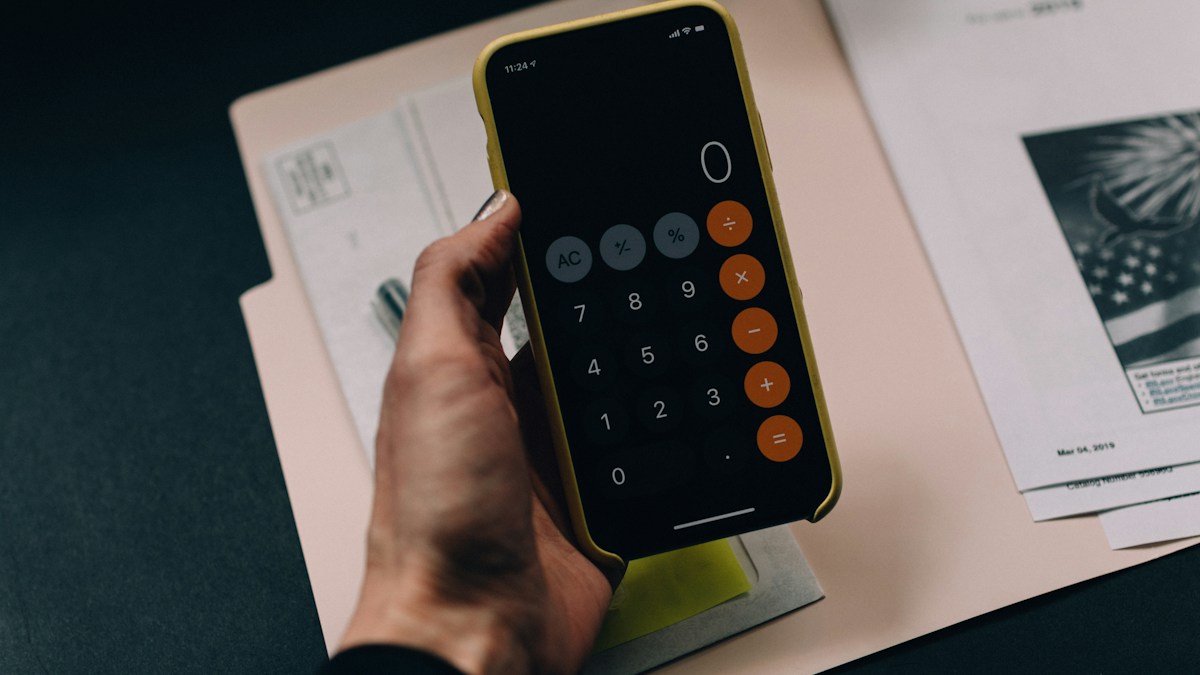


India's digital payment ecosystem has undergone a remarkable transformation over the past decade. At the centre of this transformation is the Unified Payments Interface, commonly known as UPI — a system that has fundamentally changed how hundreds of millions of Indians send and receive money every day.
Whether you're paying at a local kirana store, splitting a restaurant bill with friends, or transferring money to your family, understanding how UPI and other digital banking tools work is now an essential part of financial literacy in India.
What Is UPI and How Does It Work?
UPI is a real-time payment system developed by the National Payments Corporation of India (NPCI) and launched in 2016. It allows bank-to-bank transfers 24 hours a day, 7 days a week, 365 days a year — including on bank holidays.
Unlike traditional bank transfers that required you to know the recipient's bank account number and IFSC code, UPI introduced a simpler identity: the UPI ID (also called a Virtual Payment Address or VPA). A UPI ID looks like an email address — for example, yourname@okaxis or mobilenumber@ybl.
When you send money via UPI, you don't need to share your bank account details. You simply enter the recipient's UPI ID or scan their QR code, enter the amount, and confirm with your UPI PIN. The money moves instantly, directly between bank accounts.
UPI Apps Available in India
UPI works through apps offered by banks and third-party payment providers. Some of the most widely used UPI apps in India include:
- PhonePe — one of the most popular UPI apps, backed by Walmart
- Google Pay (GPay) — a widely used UPI app from Google
- Paytm — an early digital payments platform that also supports UPI
- BHIM — the government-developed UPI app, available on all smartphones
- Your bank's own mobile app — most major Indian banks offer UPI within their apps
All of these apps connect to the same underlying UPI network. This means a PhonePe user can send money to a Google Pay user without any issues — the app doesn't matter, only the UPI ID or QR code.
Understanding Your UPI PIN
Your UPI PIN is a 4 or 6-digit number that authorises every transaction. It is different from your bank's internet banking password and your debit card PIN. You set this PIN when you first register on a UPI app. Without your UPI PIN, no one can transfer money from your linked account, even if they have access to your phone.
Never share your UPI PIN, OTP, or bank password with anyone — not even a bank employee, government official, or customer support representative. Legitimate services will never ask for these details.
UPI Transaction Limits
UPI transactions have limits set by NPCI and individual banks. Generally, the standard UPI per-transaction limit is ₹1 lakh. Some categories, such as capital markets and IPOs, have higher limits of up to ₹2 lakh per transaction. Daily transaction limits vary by bank but are typically between ₹1 lakh and ₹2 lakh.
For small daily transactions like paying at shops, groceries or utility bills, these limits are rarely a concern. For larger transfers, you may need to use NEFT or RTGS instead.
Other Digital Payment Methods: IMPS, NEFT and RTGS
While UPI is ideal for most everyday transactions, India's banking system offers three other electronic transfer methods that are useful in different situations.
IMPS – Immediate Payment Service
IMPS enables instant fund transfers between bank accounts at any time of day or night, including weekends and holidays. It is available 24/7 and processes transactions in real time. IMPS requires the recipient's bank account number and IFSC code (or their MMID for mobile-based transfers). Transfer limits typically go up to ₹5 lakh per transaction, though banks may set their own limits. A small transaction fee may apply.
NEFT – National Electronic Funds Transfer
NEFT is processed in batches throughout the day. The Reserve Bank of India (RBI) has made NEFT available 24/7 on all days including bank holidays. NEFT processes transfers in half-hourly settlement batches. It is suitable for transfers where real-time settlement is not required. There is no minimum transfer amount, and there is no upper limit set by RBI, though individual banks may impose their own limits. NEFT is often used for large transfers and regular payments like EMIs.
RTGS – Real-Time Gross Settlement
RTGS is designed for high-value, time-critical transfers. It processes transactions individually and immediately — there is no batch processing. The minimum transfer amount for RTGS is ₹2 lakh, making it suitable for property transactions, business payments and other large fund movements. Like NEFT, RTGS is now available 24/7. Because each transaction settles individually, RTGS is considered the most secure for large amounts.
Use UPI for everyday payments up to ₹1 lakh. Use IMPS for instant transfers when UPI is not available. Use NEFT for regular, non-urgent transfers of any amount. Use RTGS for urgent transfers of ₹2 lakh or more.
Staying Safe with Digital Banking
Digital banking is highly secure when used correctly. Most fraud incidents occur not because of technical vulnerabilities but because users are tricked into sharing sensitive information or authorising payments under false pretences.
Key safety practices every digital banking user should follow:
- Never share your UPI PIN, OTP or internet banking password with anyone
- Be aware that scanning a QR code to receive money is not possible — you only scan QR codes to pay
- Be suspicious of requests to click links or download apps from unverified sources
- Register for transaction alerts via SMS or email from your bank
- Regularly review your bank statements for any unauthorised transactions
- Use only official apps from the Google Play Store or Apple App Store
Linking Multiple Bank Accounts to UPI
One of UPI's practical features is that you can link multiple bank accounts within a single UPI app. Each account gets its own UPI ID, and you can choose which account to use for each transaction. This is useful if you maintain separate savings and salary accounts or use different banks for different purposes.
Digital banking in India will continue to evolve. New features, higher limits and broader acceptance are being added regularly. Understanding how these tools work puts you in a much stronger position to manage your money safely, efficiently and without unnecessary friction.